
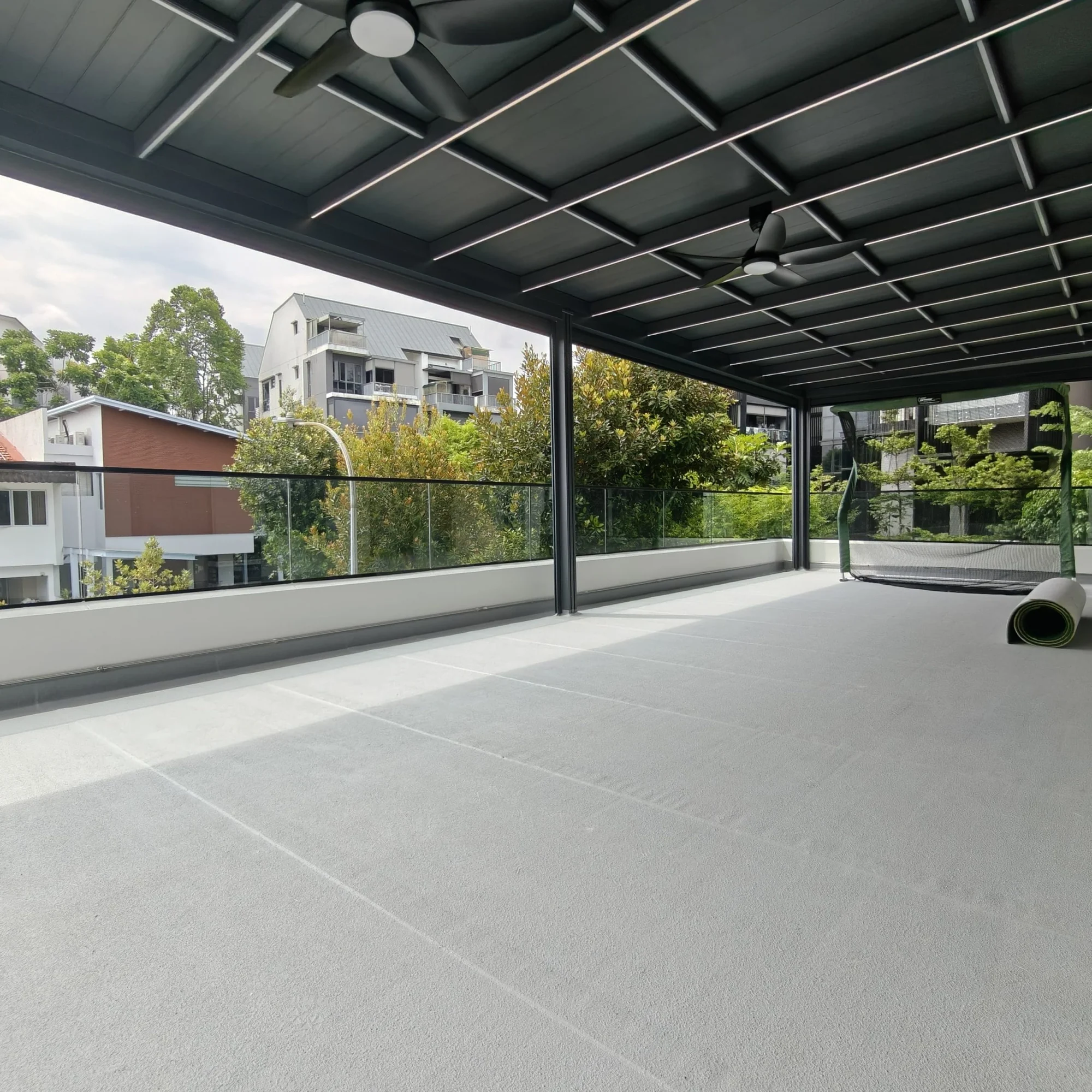
The span decides the structure
A carport has to cross the full width of a car and preferably two, with nothing in the middle to park around. That is the whole brief, and it is a structural one.
Aluminium sections carry further for their weight than steel, so the frame crossing that span is lighter. A lighter frame means smaller footings and less load into whatever it fixes to, which matters on an existing house.
Corrosion is the real argument
Steel rusts. In a coastal, humid climate with driving rain, a steel carport frame is a maintenance schedule: inspect, treat, repaint, repeat.
Aluminium does not rust. It forms a stable oxide layer that protects what is underneath, and powder coating on top of that is cosmetic rather than structural. Miss a year and nothing is quietly failing behind the paint.
Where steel still wins
Very long spans. Past a point, steel is the more economical way to cross a big distance and aluminium sections get expensive.
Heavy point loads. If something substantial is hanging off the structure, steel is usually the honest answer.
Pure cost on a sheltered site. If the frame is under cover and never sees weather, the corrosion argument disappears and so does most of the case.
What to check on a quotation
The clear span, and whether any mid post is needed. This is the thing you actually feel.
What the frame fixes to, and whether the existing structure was checked for it.
How the roof drains and where the water goes. A carport that sheds onto the driveway is a puddle you park in.
Whether the ceiling is included. On our system the soffit panel is part of it, which is why the underside looks finished rather than like a covered frame.