
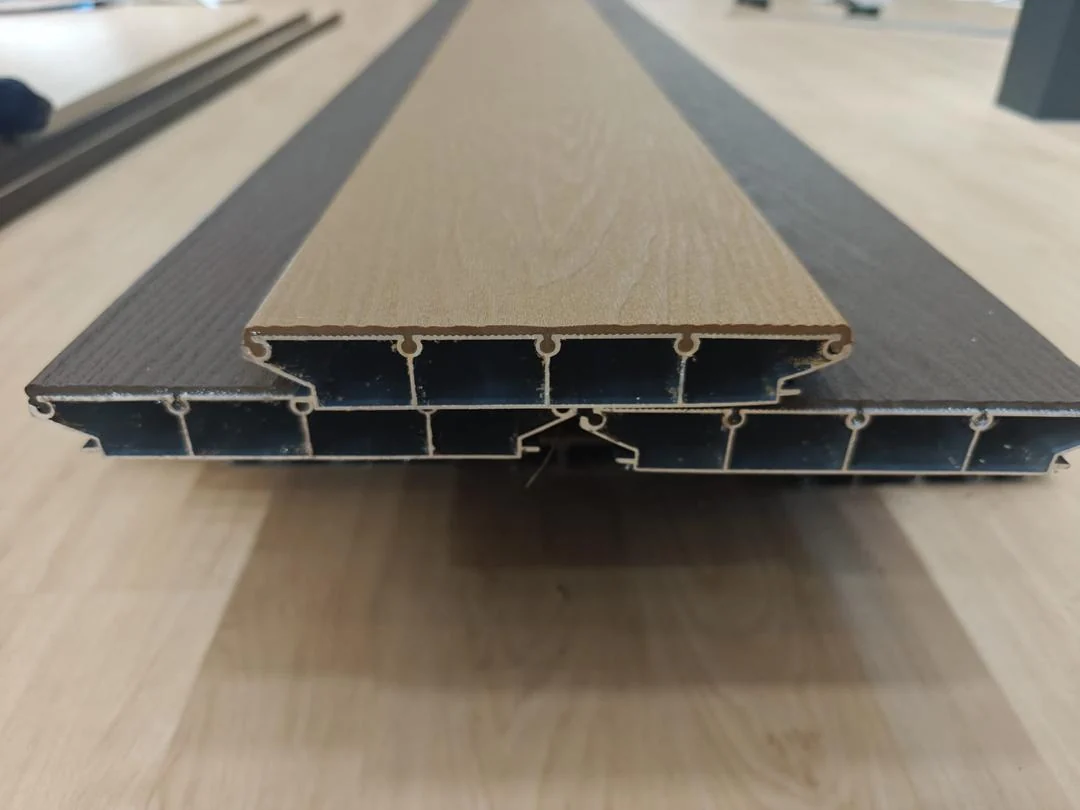
A plank and an extrusion are not the same object
A timber or composite deck board is solid through its depth. An aluminium board is an extrusion: a shape pushed through a die, hollow inside, with ribs running its length.
That single difference is where every other property comes from. Weight, stiffness, drainage and the way it fixes down are all consequences of the section.
What the chambers are doing
Taking weight out. Most of the depth of the board is air. The material sits where the stress is, at the top and bottom face and in the ribs between them.
Keeping stiffness in. Depth resists bending far more than mass does. A ribbed hollow section is stiff for its weight in a way a thin solid board cannot be.
Letting water leave. The chambers run the length of the board and the ends are open. Water that gets in runs out rather than sitting inside.
Why weight matters more than people expect
On a rooftop terrace or a balcony, loading is capped. Every kilogram of deck is a kilogram of furniture, planting or people you cannot have.
Aluminium is the lightest of the three common decking materials, and on a capped slab that is often the deciding property rather than a nice extra.
What to look for in a section
How many internal ribs there are, and whether they run the full depth.
Whether the top face is thicker than the rest, because that is the surface taking wear.
How the edge profile locates the next board, and whether the fixing ends up hidden.
Whether the ends are open. A closed chamber that fills with water is worse than a solid board.